Working Phase Newsletter
- Today
What happens when a clinician refuses to build an "addictive" wellness app?
Therapists are full of ideas, but we're also full of ethics, time constraints, and obligations to our loved ones and communities.
So when I see another therapist who has found a way to attend to a side passion, I want to glean their wisdom (for my benefit and yours)!
Therapist Todd Gerson built the mental wellness app Ninefold from scratch.
He integrated an "Anti-Scroll" design philosophy, designed to let you complete activities without tricking you into engaging longer than you wanted to.
While time constraints are a real issue for therapists, don't let over preparing or perfectionism keep you from trying something you're passionate about.
Andreana: Lots of therapists have moments where they notice a problem and think “this should be fixed,” but life and client work take over. What made you actually build Ninefold instead of shelving the idea?
Todd: Ninefold is one of many ideas I’ve had over the years! I wasn't finding what I wanted in existing apps, and I'd heard similar frustrations from clients, so I started sketching out questions and activities I liked exploring with people.
Those sketches gradually grew into modules and eventually the nine paths. Not knowing what I was getting into actually helped, I just kept taking the next step. If I'd tried to have everything figured out from the beginning, I honestly don't know if I would have gotten this far.

Todd Gerson (LPC / LMHC / LCPC)
What were the biggest learning challenges, and did being a therapist make it tougher or easier?
My biggest challenge was just understanding the technical basics. When I started, I didn't have experience with the code or the basic terminology. But once I started to grasp some of those basics, the learning became easier.
Being a therapist also made it easier in some ways because I had a clear sense of my values. My clinical background motivated me to build something aligned with helping people rather than following standard app metrics (like optimizing engagement or keeping people in the app longer).
That’s the main thing I wanted to ask you about! Ninefold seems designed to get me to complete a small prompt and then put my phone down. That's the thing I appreciated most about it!
Yes, a lot of apps have features designed to pull you back in, which can create an unintended sense of pressure, guilt, or shame. I wanted Ninefold to feel like a resource people feel empowered to use on their own terms.
When you finish an activity, you're done. There’s no pressure to start another one, no sounds or little rewards, and almost all notifications are opt-in.
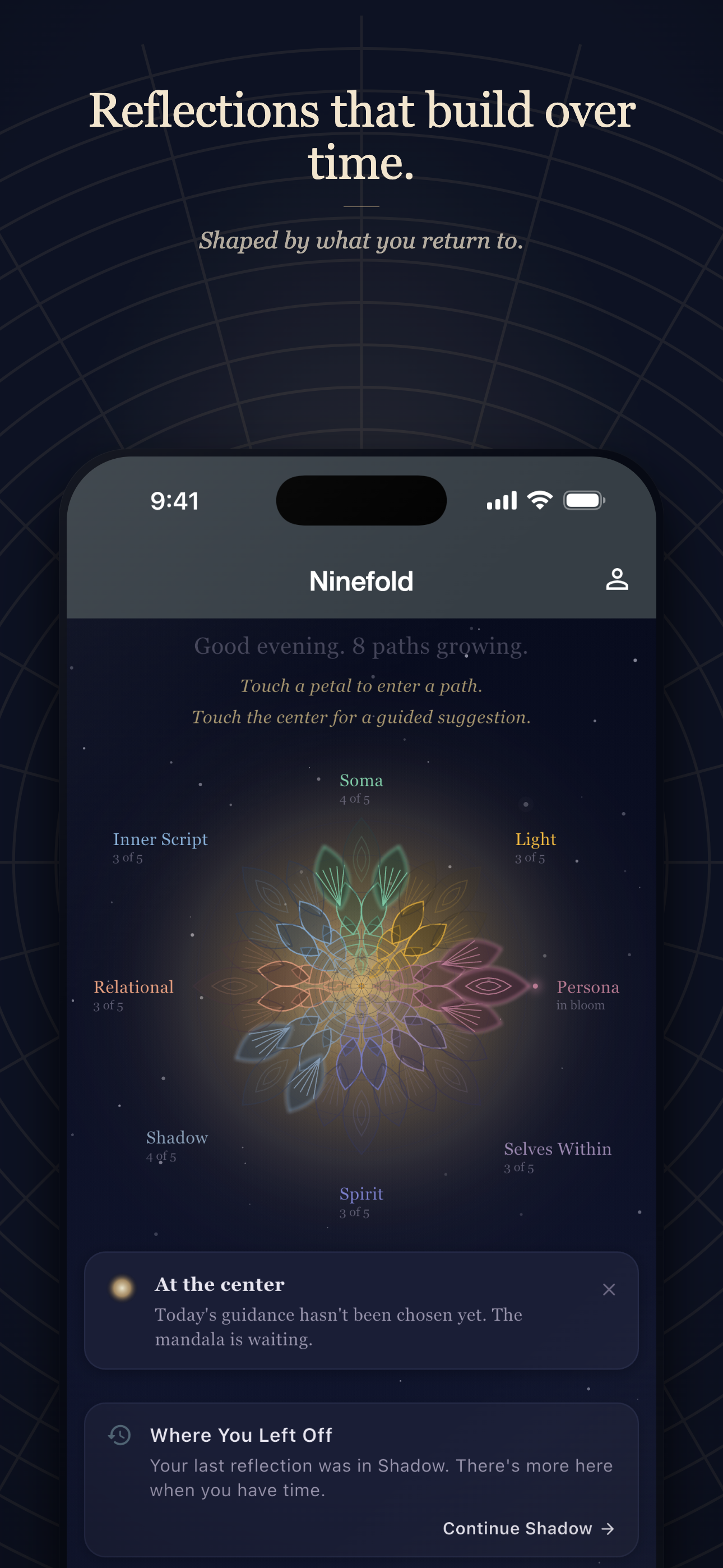
There’s a mandala that gradually fills in as you explore the paths, with a soft glow that intensifies or fades based on how many days it’s been since you completed an activity, but not much beyond that.
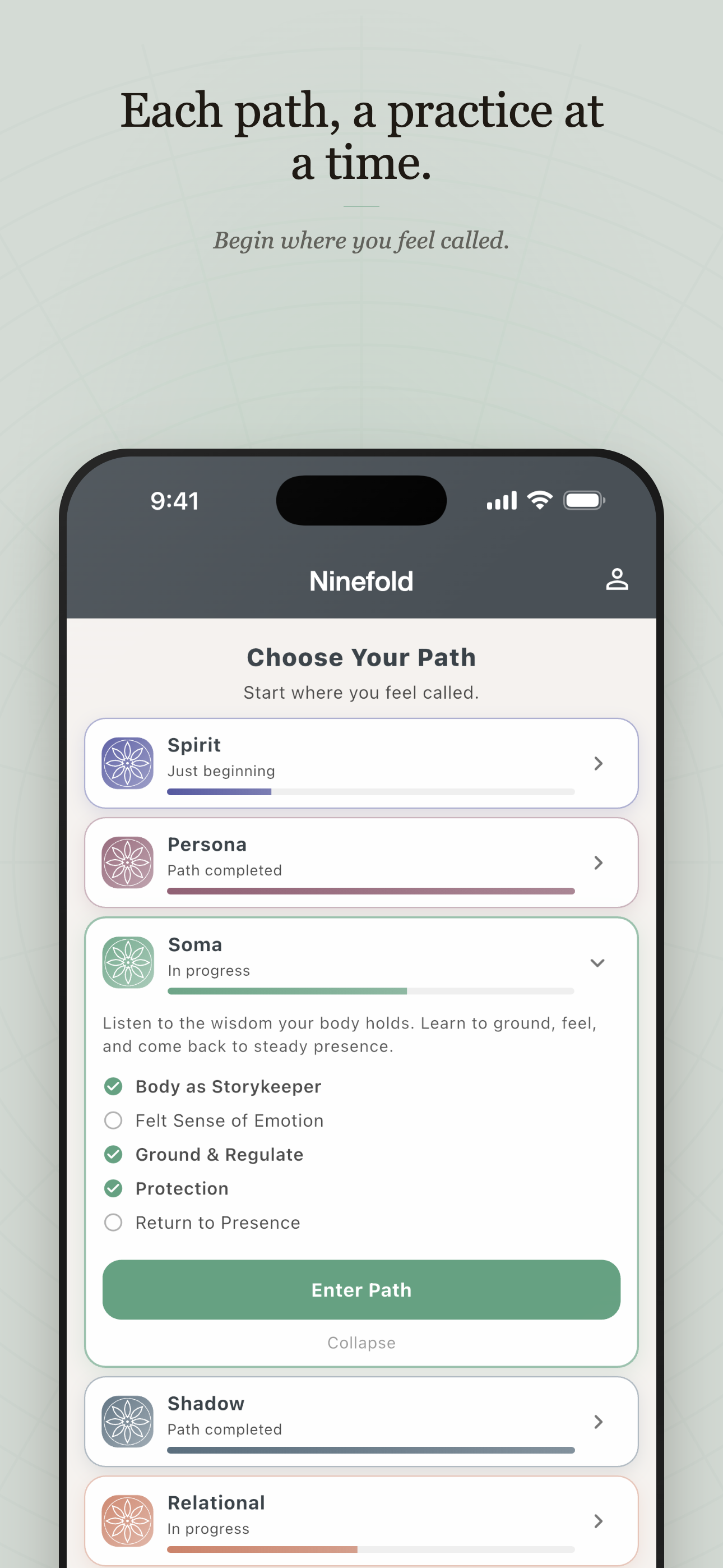
You let the user choose a different path to engage with whenever they want: “Relational, Shadow, Light, etc.” How did you decide on these (nine) options, and what didn’t make the cut?
I started with ten paths, and cut two: Creativity and Calling. Those ideas fit naturally into other sections, so I condensed it to eight. As I went forward, I felt something deeper was missing and created Root System, a hidden ninth path inspired by schema therapy that unlocks as you complete the others. This gives users the chance to explore some of the deeper patterns that shape how we understand ourselves and relate to the world.
Did you envision therapists using this with clients, or is it more for the general public? What kind of feedback are you getting?
The app is accessible to anyone, though therapists were a natural starting point since they recognize the clinical principles behind the activities. Feedback has been really positive overall, especially around small usability tweaks. But it’s complicated getting feedback from therapists, we tend to be very encouraging. So I appreciate when active users bring me their experiences, especially if it’s unique.
How do you practically balance your practice, app maintenance, and personal life?
My family and my therapy practice have always been my biggest priorities, but building Ninefold required a lot of sacrifices in other areas of my life.
For a long time, I worked on it during morning breaks, client cancellations, my kid’s nap time, and late nights; reading for leisure, hiking, and self-care took a backseat. These days, maintaining the app is much more manageable than building v1, and having a supportive partner made all the difference.
Because I don't have investors dictating growth speed, this process feels more like a machine that needs occasional maintenance but won't fall apart if I step away.
For someone wanting to develop their own side project, what would you tell them to do first?
Just get started and be willing to make mistakes. Make sure this is meaningful enough to you that you don’t mind investing the time and energy.
As therapists, we encourage process-based goals over outcome-based goals. Instead of thinking about everything I needed to accomplish, I had to shift to think "I have an hour of free time let's sit down and start working on something."
How can therapists connect with you?
The app is on Ninefoldapp.com, on the Apple App Store and Google Play, and I’m having fun on Instagram at @ninefold.app.
I’m also active on LinkedIn, and recently joined your sister community, Weceü - I’m grateful to you for creating that space for connection!
I welcome therapists’ observations, suggestions, and requests for app features!
-Special thanks to Todd Gerson (LPC / LMHC / LCPC) for taking the time to share your experiences with the rest of Working Phase Community! Therapy professionals can try it out for 90 days FREE at https://ninefoldapp.com/for-professionals -Andreana